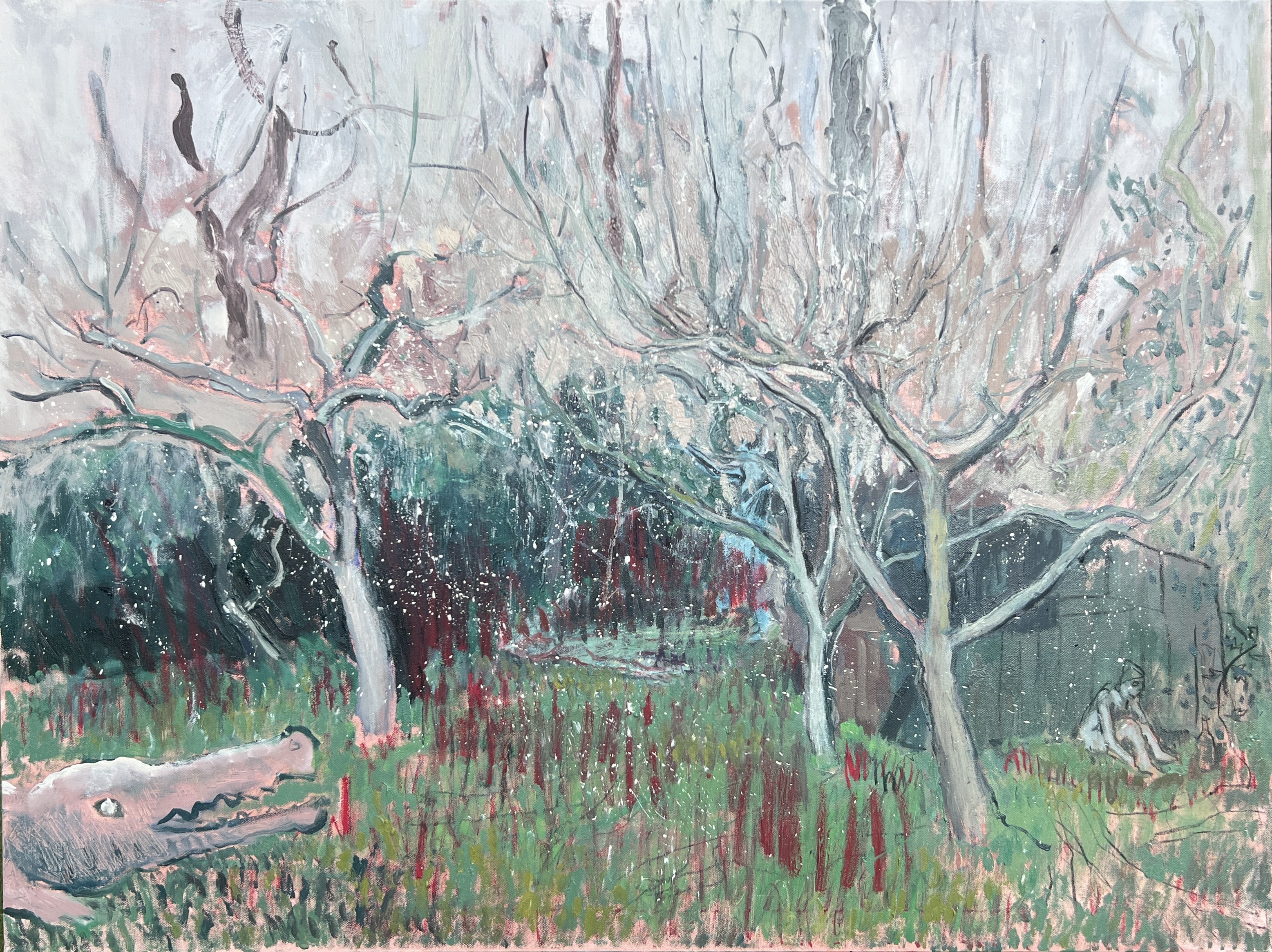
LEPIDUS: What manner o’ thing is your crocodile?
ANTONY: It is shaped, sir, like itself, and it is as broad as it hath breadth. It is just so high as it is, and moves with it own organs. It lives by that which nourisheth it, and the elements once out of it, it transmigrates.
LEPIDUS: What color is it of?
ANTONY: Of it own color, too.
LEPIDUS: ’Tis a strange serpent.
ANTONY: ’Tis so, and the tears of it are wet.
Antony and Cleopatra, Act II, Scene 7
The artwork on this site is by Orlando Seale, an artist, actor, musician, teacher and all round multitalented creature. You can see the original paintings and more of his work on his website here.
Orlando’s work is unusual in lots of ways, not least in managing to be both playful and deeply serious. Seriously playful, playfully serious. The capacity to be both these things seems to me to be pretty close to what it means to be fully alive.
Crocodiles sneak their way into many of Orlando’s paintings. The crocodile is rich in symbolic meaning and many people report them showing up in their dreams. It lurks beneath the surface: seemingly calm, still waters may hide danger and aggression beneath. In keeping with this deceptive appearance is the idea of crocodile tears, a fraudulent performance of feeling. The crocodile’s teeth connote the healthy aggression of appetite, biting in the service of life. But/and it is also deadly. This episode of the excellent podcast This Jungian Life explores the idea of the crocodile as symbol.
Roald Dahl’s short book for children The Enormous Crocodile, illustrated by Quentin Blake, brilliantly depicts the crocodile’s shape-shifting, deceitful nature and taps into one of the most primitive childhood fears and fantasies: that of being devoured. I loved it as a child and I still love it now.

Leave a Reply